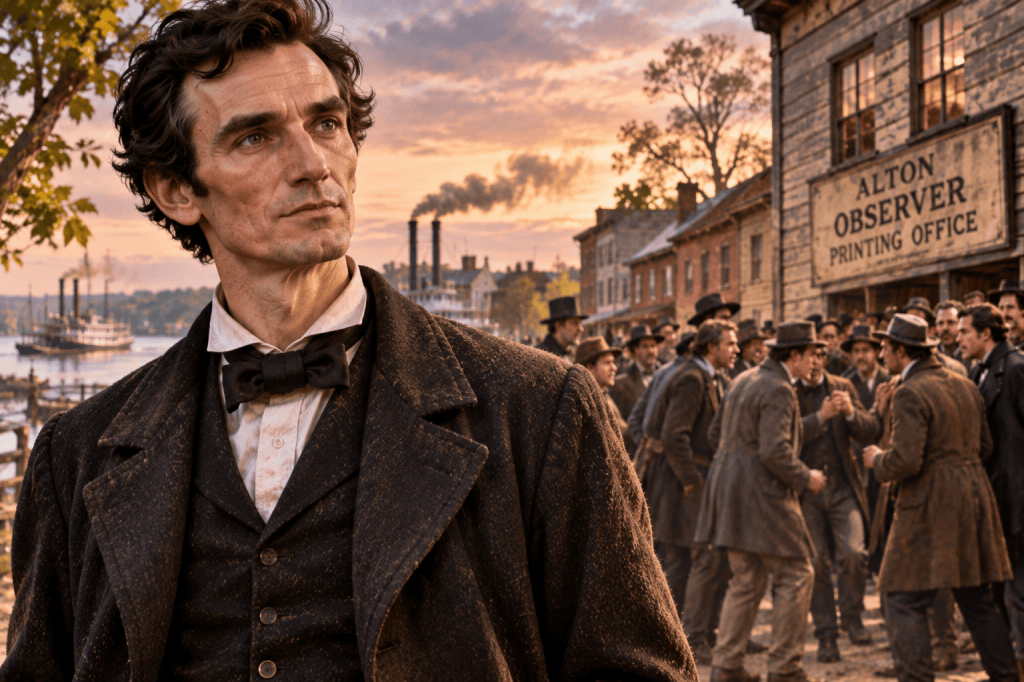
In 1837, the United States was still a young nation. The American Revolution had established independence, but an important question remained unanswered. Could ordinary people govern themselves?
Abraham Lincoln worried about that question. Across the country, angry mobs were taking the law into their own hands. Newspapers were attacked. People were threatened. Violence was increasingly being used to silence unpopular opinions.
To Lincoln, the danger went far beyond any single disagreement. If Americans stopped respecting the law whenever they disliked what someone said or believed, how could their system of government survive? In January 1838, Lincoln addressed these concerns in a speech before the Young Men’s Lyceum in Springfield, Illinois. He warned that the greatest danger to the United States might not come from a foreign enemy. It could come from within.
He feared that mob violence and contempt for the law could eventually destroy the institutions Americans had created. That speech helped inspire the premises of my historical mystery, Lincoln Seeks Justice for Elijah Lovejoy. I began wondering what might happen if Lincoln encountered such a crisis personally. What if he went to Alton, Illinois, where abolitionist newspaper editor Eliajh Lovejoy was facing increasingly violent opposition?
Lovejoy’s outspoken criticism of slavery had made him enemies. His printing presses had been attacked and destroyed. Threats against him were escalating. But Lincoln did not have to agree with Lveojy’s abolitionism to recognize the danger. If a mob could decide who was allowed to publish a newspaper, what would prevent another mob from deciding who was allowed to speak, worship, or vote?
That is what motivates Lincoln in my novel. He does to Alton hoping to stop the violence before the situation gets completely out of control. But Alton presents him with a complicated problem. The people involved have different beliefs, interests, and loyalties. Some are willing to use violence to achieve their goals. Others believe they are defending their rights. and the authorities are struggling to maintain order.
Lincoln is a lawyer, but what happens when people no longer respect the law? That is the question at the heart of my story. The historical Abraham Lincoln did not travel to Alton to investigate the Lovejoy controversy. His involvement ins my invention. But his concern about mob violence was real. And I think it gives him a powerful reason to become involved in the mystery.
Current Projects
My Book: Continuing revisions of Lincoln Seeks Justice for Elijah Lovejoy, a historical mystery inspired by Abraham Lincoln’s concerns about mob violence and the survival of American democracy.
Edward Bryant: Continuing preparations for future publication and preservation of stories by my friend Edward Bryant.
Thanks for walking alongside me.

