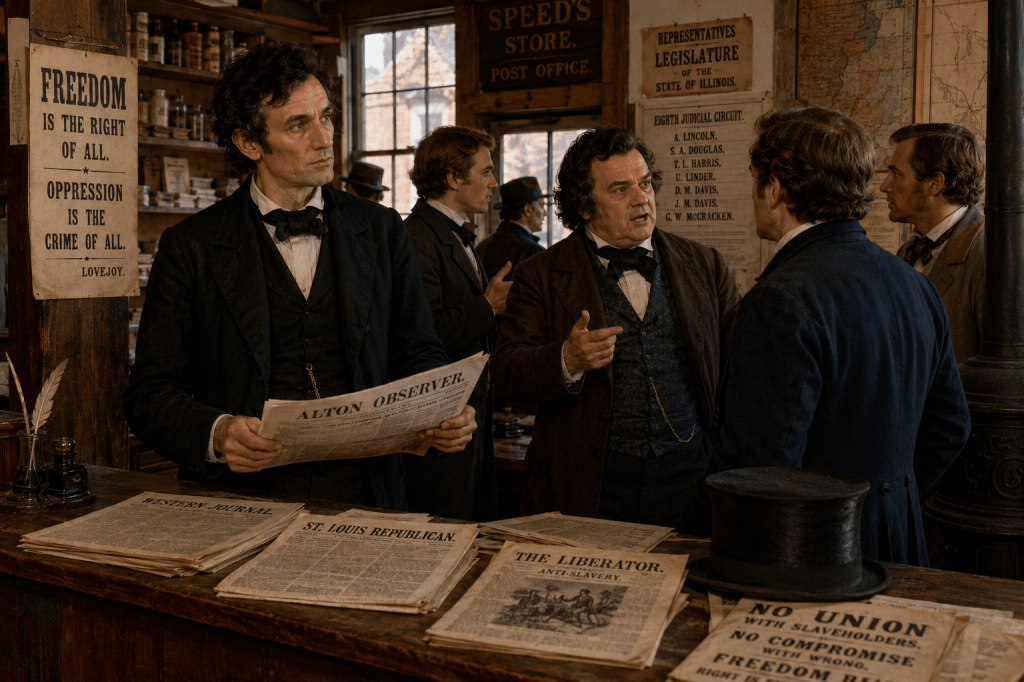
One of the questions I had to answer to write Lincoln Seeks Justice for Elijah Lovejoy was: What did Abrahm Lincoln know about the growing crisis in Alton. Today we can look back on history and see events as if they were inevitable. We know how the stories end. The people living through them did not.
Lincoln was a new lawyer in Springfield in 1837. He was building his career, studying law, serving in the legislature, and paying close attention to the political debates of his day. Like many Americans, he learned about events through newspapers, conversations, and letters.
The controversy surrounding Elijah Lovejoy was hardly a secret. Lovejoy himself was a newspaper editor. He wrote extensively about the attacks on his presses, the threats he faced, and the growing tensions in Alton. His struggles were discussed not only in Illinois but across the region.
By that point, Lovejoy had already seen multiple presses destroyed. He had been forced from St. Louis. His life had been threatened repeatedly. Friends urged caution. Enemies openly challenged him. The conflict was becoming increasingly difficult to ignore. For Lincoln, however, the story may have felt even closer than newspaper headlines.
Lincoln served in the Illinois legislature, where he worked alongside many of the politicians involved in the debates surrounding slavery, abolition, and free speech. Some of the men opposing Lovejoy were fellow legislators. Others moved in the same political circles.
Usher Linder, one of the Lovejoy’s most outspoken opponents, was also a lawyer who rode the Eighth Judicial Circuit with Lincoln. The events unfolding in Alton were not simply involving strangers. They involved lawyers, politicians, and public figures Linoln knew personally.
This brings us back to the reality. Was Lincoln merely reading about a controversy, or was he watching people he knew become part of a growing crisis? A few months later Lincoln delivered his Lyceum Address, warning about the dangers of mob violence and lawlessness. Before Lincoln could decide what to do, he first had to understand what was happening. For a novelist, that is where the story begins.
Current projects:
- My book: continuing revisions and incorporating writers group comments
- Edward Bryant: continuing to review stories for future publication
History is often about what happened. Historical fiction is often about what people knew before it happened.
Thanks for reading and walking alongside me.

