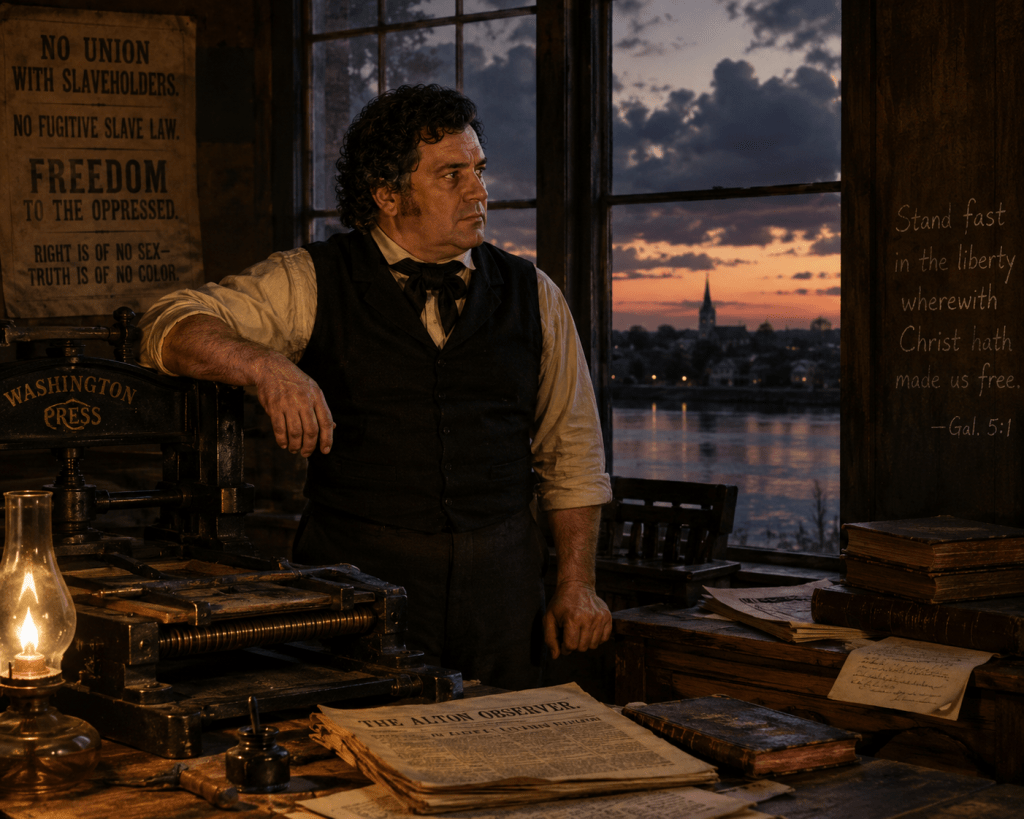
One of the questions at the heart of my novel is not about Abraham Lincoln. It is about Elijah Parrish Lovejoy. Why did he stay?
By the time Lovejoy arrived in Alton, he had already experienced a great deal of violence toward he and his family. This was not a man walking blindly into danger, but he hoped it would be better. The community leaders had assured him it would be better.
His newspaper office had been attacked. Presses had been destroyed. He had been driven from St. Louis by growing hostility. His life had been threatened repeatedly. On one occasion, a group of men stopped him on the road intending to tar and feather him. According to one account, Lovejoy calmly asked them to deliver medicine to his sick wife before they carried out their plan. The story goes that they were so moved by his concern for his family that they abandoned the attack.
Yet courage alone does not explain his choices. Most people, after seeing one press destroyed, might decide the fight was not worth it. Lovejoy watched multiple presses destroyed. He endured threats, intimidation, and public hostility. He had a wife to think about and children to protect. He was tired of running.
The deeper question may be why he believed he could not simply walk away. Lovejoy was not only a newspaper editor. He was a minister. His opposition to slavery was rooted in his religious faith and his belief that certain moral truths could not be abandoned for the sake of convenience or safety. He came to see the struggle as more than a political dispute. It was a matter of conscience.
That conviction helps explain his remarkable persistence. Lovejoy believed he was accountable, not to public opinion, but to God. That believe gave him a strength that even some of enemies respected. It convinced others to join his cause. At some point every person facing danger must decide whether to retreat, compromise, or stand firm. Lovejoy made his choice.
These questions continue to follow me through the novel. Historical fiction often begins with a mystery. Sometimes the mystery is not who committed a crime or what happened next. Sometimes the mystery is understanding why a person chose the path they did when easier options existed. For me, that remains one of the most intriguing questions in the entire story.
Why did Elijah Lovejoy stay?
Current projects:
- My book: revising Chapter Three and incorporating comments from my writers group.
- Edward Bryant: continuing to review stories for future publication
Sometimes the most interesting historical questions are not about what happened. The are about why people chose the path they did.
Thanks for reading and walking alongside me.

