William Harned wasn’t an abolitionist. Yet when the conflict surrounding Elijah Lovejoy’s printing press grew increasingly dangerous in Alton, Illinois, Harned became one of the men willing to defend him. Why?
For Harned, it seems to have been less about slavery than about something more basic: the law and what he believed was right. Harned had come to Alton from Texas. His family had lived among Native Americans, he could speak some of their languages, and he had combat experience.
But by the time of the Lovejoy controversy, Harned wasn’t living the life of a soldier. He was running Alton’s Mansion House Hotel and raising a family with several children. He had plenty to lose. Then he witnesses the destruction of Lovejoy’s second printing press.
Among the men involved, Harned recognized Doctors Beall, Hope, and Jenkins. He already knew them to be men he didn’t trust. If they were involved, Harned suspected that what was happening couldn’t be good. He found himself moving toward Lovejoy’s side. Not because he had become an abolitionist. He hadn’t.
Harned believed in the law. He believed property should be protected. And he believed that what he was witnessing was wrong. As the danger increased, Eliajh Lovejoy and Wintrop Gilman wanted Harned to lead a militia organized to protect the property. But the militia they wanted was never formed.
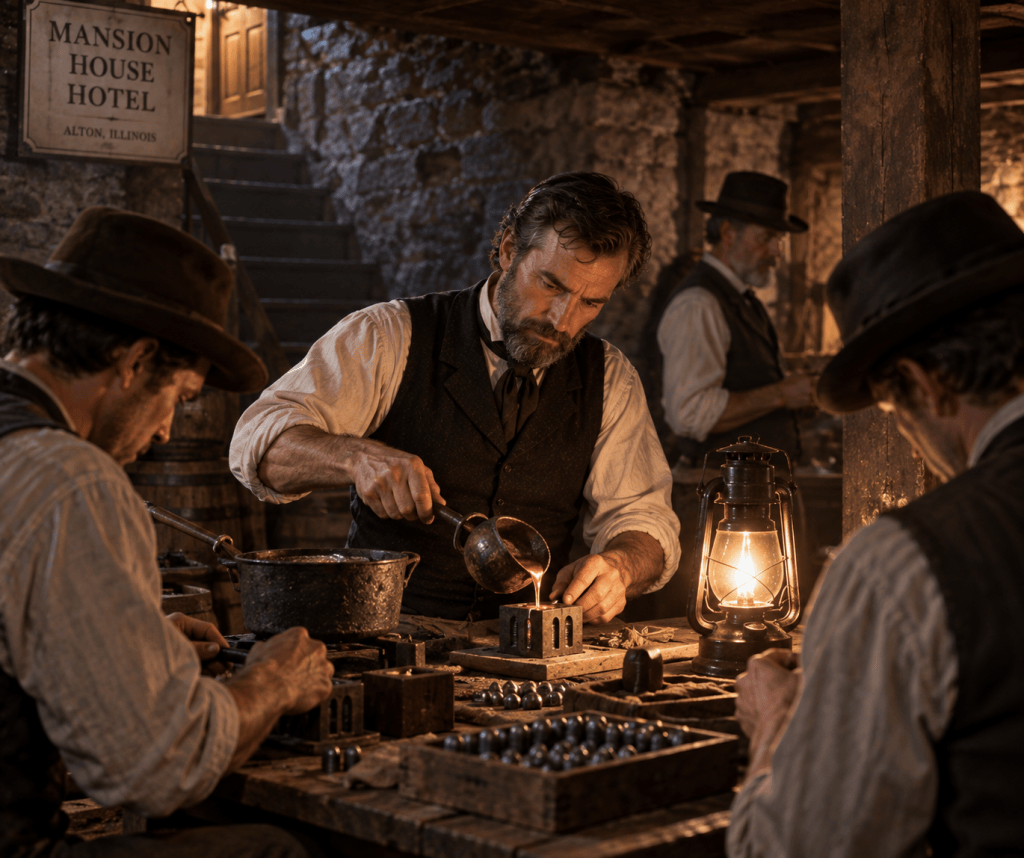
The danger didn’t disappear simply because official protection failed to materialize. So the men prepared themselves. In the cellar beneath Harned’s hotel, they molded bullets. I find Harned interesting because history is rarely divided neatly between people who agree about everything.
Sometimes people stand together because they agree about one thing that matters enough. Harned didn’t have to share Lovejoy’s views on slavery to believe that destroying his property and silencing him through violence was wrong.
That distinction became important when I Lincoln Seeks Justice for Elijah Lovejoy. The people surrounding Lovejoy weren’t one unified group who all thought alike. They had different beliefs, different motives, and different reasons for deciding where they would stand.
William Harned made his choice.
Current Projects
- My Book: Continuing revisions of Lincoln Seeks Justice for Elijah Lovejoy, where people with very different beliefs find themselves forced to decide what they are willing to defend.
- Edward Bryant: continuing preparations for future publication and preservation of stories by my friend Edward Bryant.
Thanks for walking alongside me.

