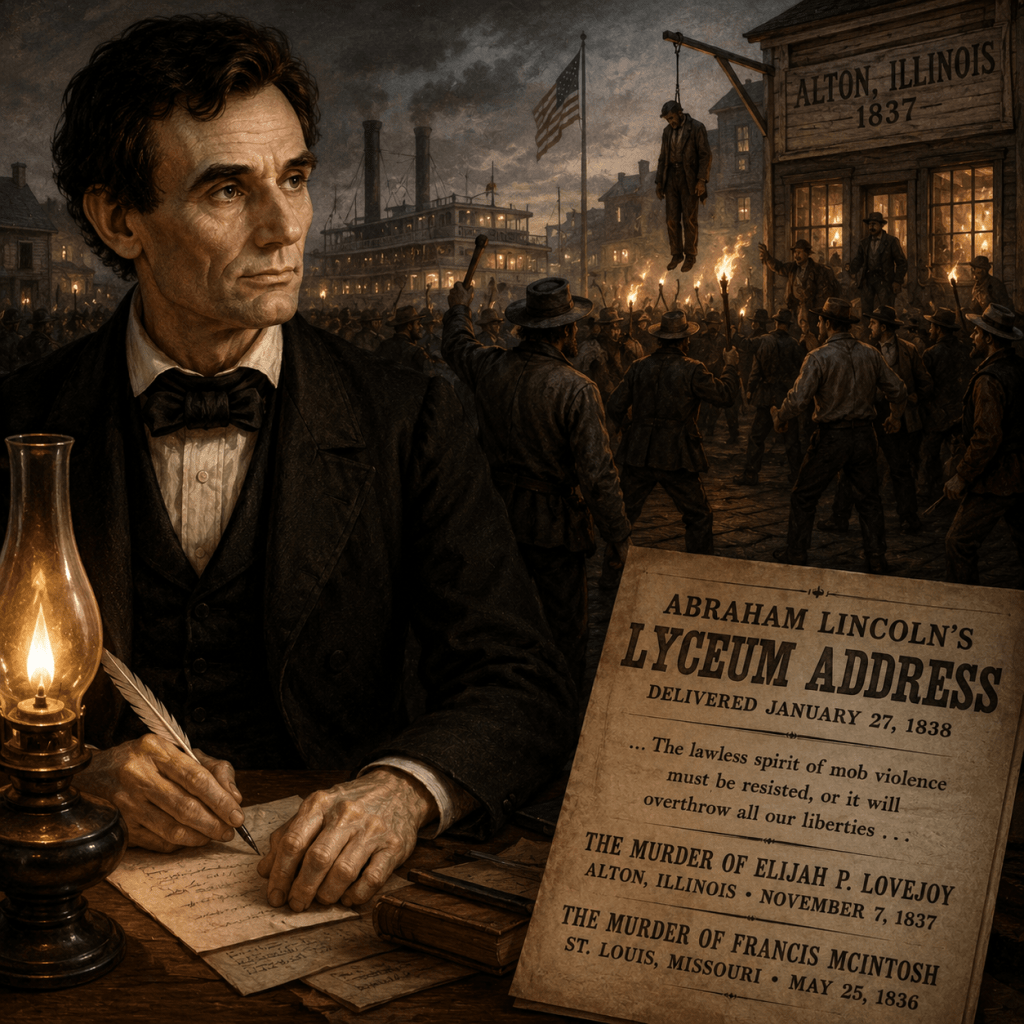
One of the moments that I refer to in my study of Abraham Lincoln is the Lyceum Address. At the time, Lincoln was still a new young lawyer and politician in Illinois. He was not yet the national figure history would later remember. But in this speech, it is possible to see the beginnings of the ideas that would define much of his later life.
The address came during a period of increasing mob violence in the country, including the murder of Eliah P. Lovejoy in Alton, Illinois, and the earlier killing of Francis McIntosh in St. Louis. Lincoln understood that these events represented more than isolated incidents. What concerned him was the growing willingness of people to place anger and violence above law itself. In the Lyceum speech, he warned that a nation could not survive if its institutions were gradually weakened by mob rule and disregard for legal order.
At this stage of his life, Lincoln was already involved in politics and his thinking about the nation’s future was already quite serious. He was looking beyond the immediate events and asking what kind of country the United States was becoming. That is part of why the speech matters so much in the novel I am writing.
I actually use the Lyceum speech within the story itself because it helps reveal the larger meaning behind the events surrounds Lovejoy’s death. It is part of the conclusion for the book. The conflicts in Alton were not simply local disputes. there were signs of growing national divisions that Lincoln already recognized as dangerous. The speech captures him at a moment when he was beginning to understand the scale of what lay ahead.
Current projects:
- My book: revising Chapter 10
- Edward Bryant: continuing to review stories for future publication
History often becomes most important at the moment when future events are only beginning to emerge.
Thanks for reading and walking alongside me.

