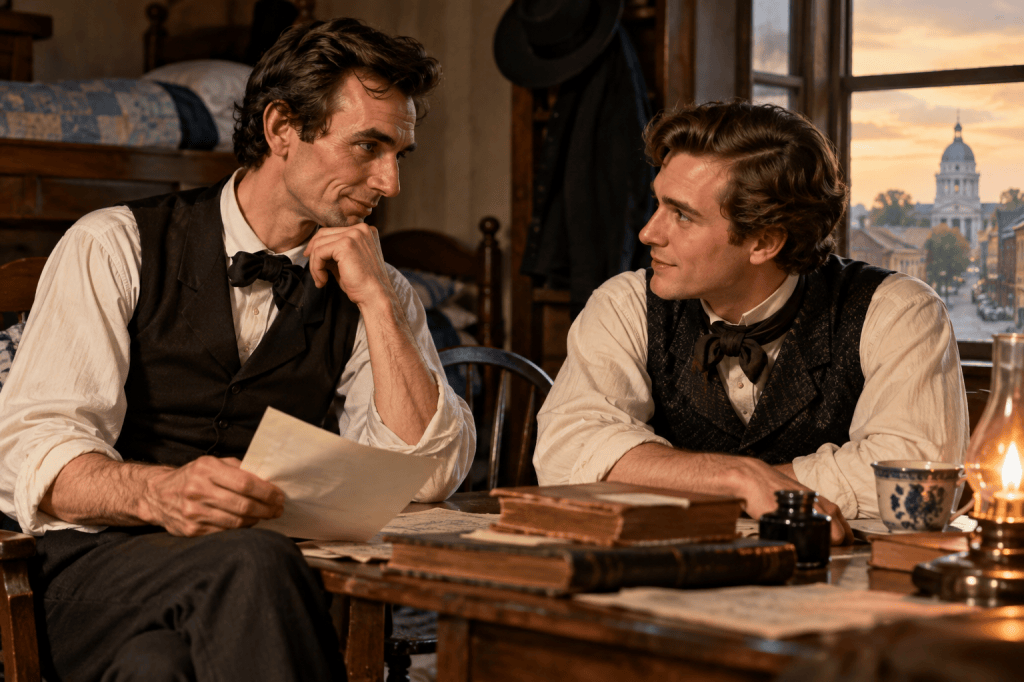
When Abraham Lincoln arrived in Springfield in 1837, he didn’t have enough money to furnish a bed. Joshua Speed offered to share his. Lincoln carried his saddlebags upstairs, came back down and announced, “Well, Speed, I’m moved.”
It was an extraordinarily generous thing to do for someone he had only just met. It also began one of the closest friendships of Lincoln’s life.
The two men were at similar points in their lives. They were young, establishing themselves professionally and finding their places in society. Both would struggle with courtship and marriage and with the expectation that respectable young men should find suitable wives.
They shared a room, their worries and some of the most personal parts of their lives. But there was an important difference between them. Speed came from a wealthy Kentucky family that owned enslaved people. Lincoln already opposed slavery. Just weeks before moving to Springfield, he and fellow legislator Dan Stone had formally declared that slavery was founded on “injustice and bad policy.”
But Lincoln was not an abolitionist in the way Elijah Lovejoy was. Lovejoy publicly and relentlessly attacked slavery through his newspaper. He represented a much more immediate abolitionism than Lincoln was prepared to embrace.
These differences are something I was able to explore in Lincoln Seeks Justice for Elijah Lovejoy.
Lincoln is grateful to Speed. He genuinely likes him, and their friendship quickly becomes important to him. But friendship doesn’t make the differences between them disappear.
Then there is Elijah Lovejoy. In my novel, the controversy surrounding Lovejoy brings slavery and abolition directly into the lives of these two young friends. Lincoln already believes slavery is wrong. Speed comes from a slaveholding family. Lovejoy is demanding that people confront the institution openly.
None of them knows where the argument over slavery will eventually lead. Lincoln and Speed certainly don’t know that the struggling young lawyer who couldn’t afford a bed will someday become president and lead the country through the Civil War. They don’t know that their friendship will survive those years.
Current Projects
My book: continuing revisions of Lincoln Seeks Justice for Elijah Lovejoy, where real historical relationships help me explore the choices and conflicts surrounding the Lovejoy controversy.
Edward Bryant: continuing preparations for future publication and preservation of stories by my friend Edward Bryant.
Thanks for walking alongside me.

