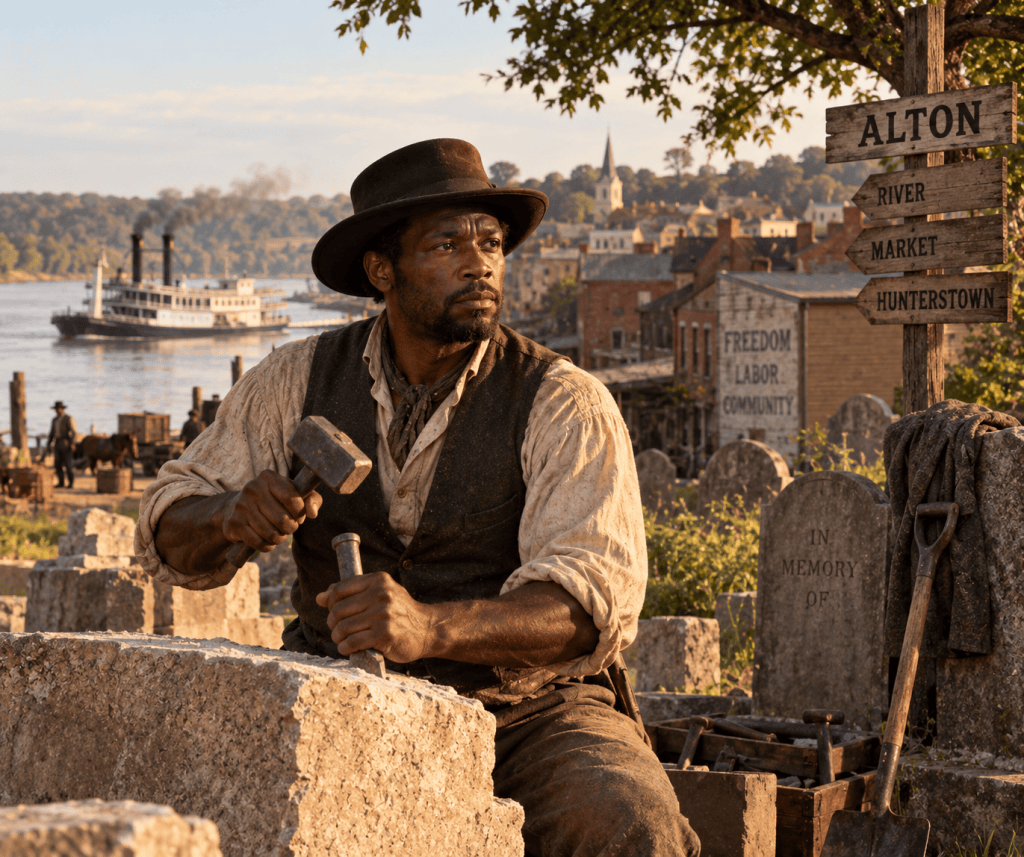
I discovered an uncomfortable problem while writing Lincoln Seeks Justice for Elijah Lovejoy. I was writing a novel about slavery and abolition, and almost all of the people in my story were white. It wasn’t because there were no Black people in Alton. There was a significant Black community in and around the city, including Hunterstown. The problem was finding their stories.
The historical record was filled with white men. They were newspaper editors, lawyers, judges, politicians, businessmen, ministers and public officials. There were the people whose names appeared in newspapers, court records, letters and accounts of the event surrounding Elijah Lovejoy.
Black people were there, but they had few legal or political rights. They couldn’t participate equally in the courts, government or other institutions that produced so much of the surviving record. And yet they weren’t bystanders. They were stakeholders. This battle over slavery and abolition affected them more directly than almost anyone else.
The surviving story could easily become one of white men arguing with other white men about the freedom of Black people. I didn’t want my novel to do that. Then I found Scotch Johnson. Scotch was a Black man living in Alton. He worked as a stone mason and a gravedigger. I also found reports that he had bragged about helping runaway slaves.
Then I found a tantalizing paragraph about his earlier life. According to that account, Scotch came from Scotland and had traveled in Europe with Lord Aberdeen. His brother James later came to America as well. It wasn’t much, but it was enough to make me want to know him.
I knew that Scotch later married and had children, but I knew very little about his personal life during the time of my novel. So I gave him a love interest. I imagined conversations, relationships and experiences that history never recorded. That’s part of writing historical fiction. I do it with Abraham Lincoln, Elijah Lovejo and the other historical people in the novel too.
But Scotch was different. With many of the white men, I had letters, speeches, newspaper accounts, court proceedings and other records to help me imagine the lives between the documented events. With Scotch, I had fragments. That doesn’t mean he didn’t have a story. It means much less of his story was preserved.
Black men and women were living, working, loving, raising families and building a community in and around Alton. The were living in the middle of this struggle, even when their voices weren’t recorded. Historical fiction gives me room to imagine some of what the historical record left out. And Scotch Johnson gave me a place to begin.
In Lincoln Seeks Justice for Elijah Lovejoy, he gets to have a life of his own.
Current Projects
- My Book: continuing revisions of Lincoln Seeks Justice for Elijah Lovejoy, bringing together the documented history and the lives that historical fiction allows me to imagine.
- Edward Bryant: continuing preparations for future publication and preservation of stories by my friend Edward Bryant.
Thanks for walking alongside me.

