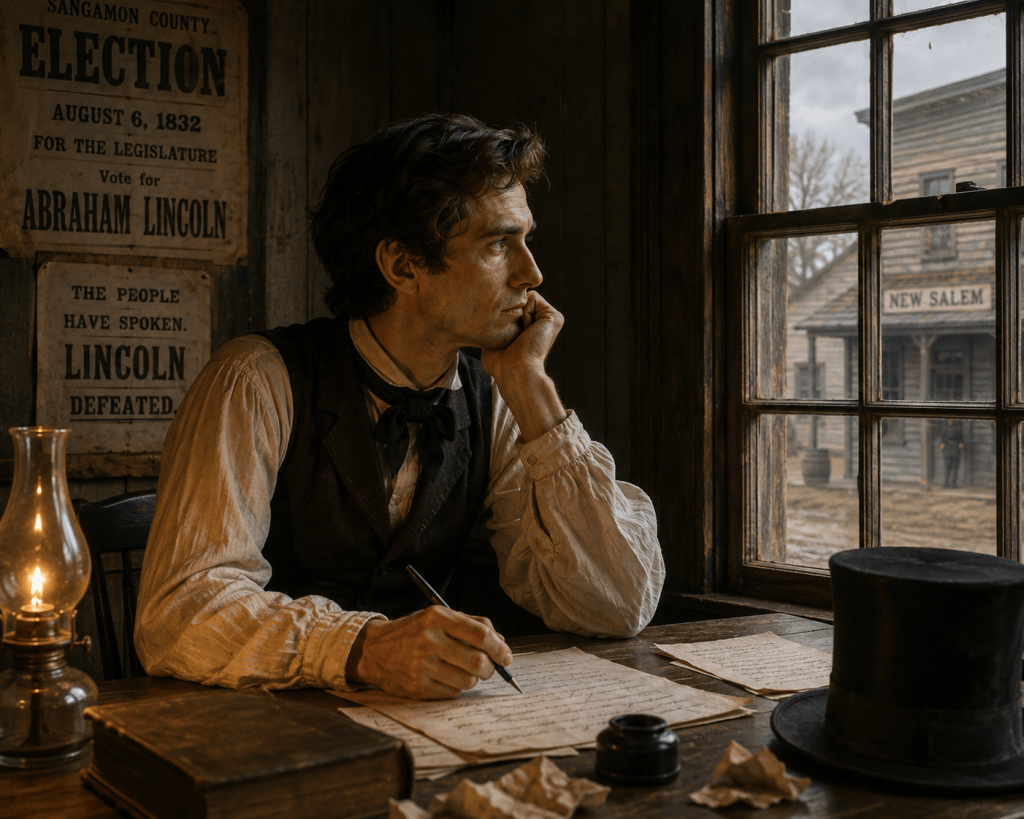
It’s hard to imagine Abraham Lincoln losing an election. We know what came later. President. The Civil War. The Emancipation Proclamation. A face carved into Mount Rushmore. But in 1832, none of that existed.
Lincoln was twenty-three years old when he ran for the Illinois legislature for the first time. He had little money, little formal education, and none of the prestige we associate with him today. And he lost.
There was one encouraging sign. The people who knew him best seemed to like him. In his own New Salem precinct, Lincoln received 277 of the 300 votes cast. But that wasn’t enough to win the larger district.
His political career could have ended there. It didn’t. Two years later, Lincoln ran again and won. We know where his story eventually leads, which is part of what makes these early years so fascinating to me. I like seeing Lincoln at different stages of his life and watching him grow into the man who would eventually become president.
By the time of Lincoln Seeks Justice for Elijah Lovejoy, Lincoln had begun climbing politically, but he was still years away from the presidency. He could succeed. He could fail. He could make mistakes. And he certainly didn’t know where his ambitions would eventually take him. Neither did anyone around him. Abraham Lincoln didn’t know he was Abraham Lincoln.
That’s the Lincoln I wanted to capture in my novel: not a different Lincoln from the man who became president, but the same man earlier in his journey. Perhaps that’s what makes his first election defeat so interesting.
We know what Abraham Lincoln became. In 1832, he was still becoming.
Current Projects
- My Book: Continuing revisions of Lincoln Seeks Justice for Elijah Lovejoy, featuring the ambitious, uncertain young Abrahan Lincoln of the 1830s.
- Edward Bryant: Continuing preparations for future publication and preservation of stories by my friend Edward Bryant.
Thanks for walking alongside me.

