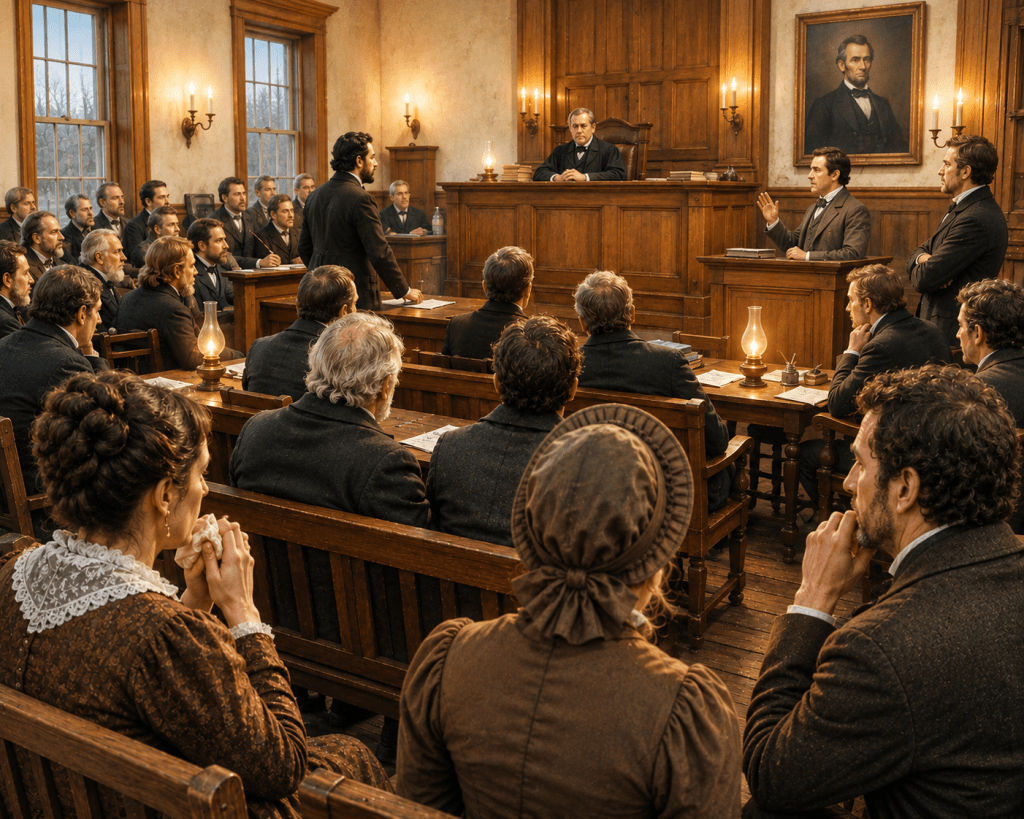
Have you ever wondered why some history stays with you while other history is quickly forgotten?
When I began researching Lincoln Seeks Justice for Elijah Lovejoy, I immersed myself in newspapers, speeches, letters, memoirs, and court records. The facts were fascinating, but something was missing. I discovered that history alone doesn’t always help us understand the people who lived it.
A courtroom transcript can tell us what a witness said. It can’t tell us what it felt like to sit in the gallery waiting to hear the verdict. A newspaper can report a speech. It can’t show us the expressions on the faces of those who heard it or the conversations that followed as people walked home that evening.
That is where historical fiction has its greatest strength. It allows us to step into anoher person’s shoes and experience history as they experienced it–not knowing what will happen next, wondering who can be trusted, fearing the consequences of a single decision, and hoping that justice will prevail.
As an author, that has changed the way I think about history. Facts are essential, but people are what make history unforgettable. My hope is that when readers open my novel, they won’t feel like they are reading about history. They’ll feel like they’re living it.
Current Projects
- My book: Continuing revisions of Lincoln Seeks Justice for Elijah Lovejoy as I bring history and story together.
- Edward Bryant: Continuing to preserve and republish the work of my late friend Edward Bryant.
Thank you for walking alongside me.

