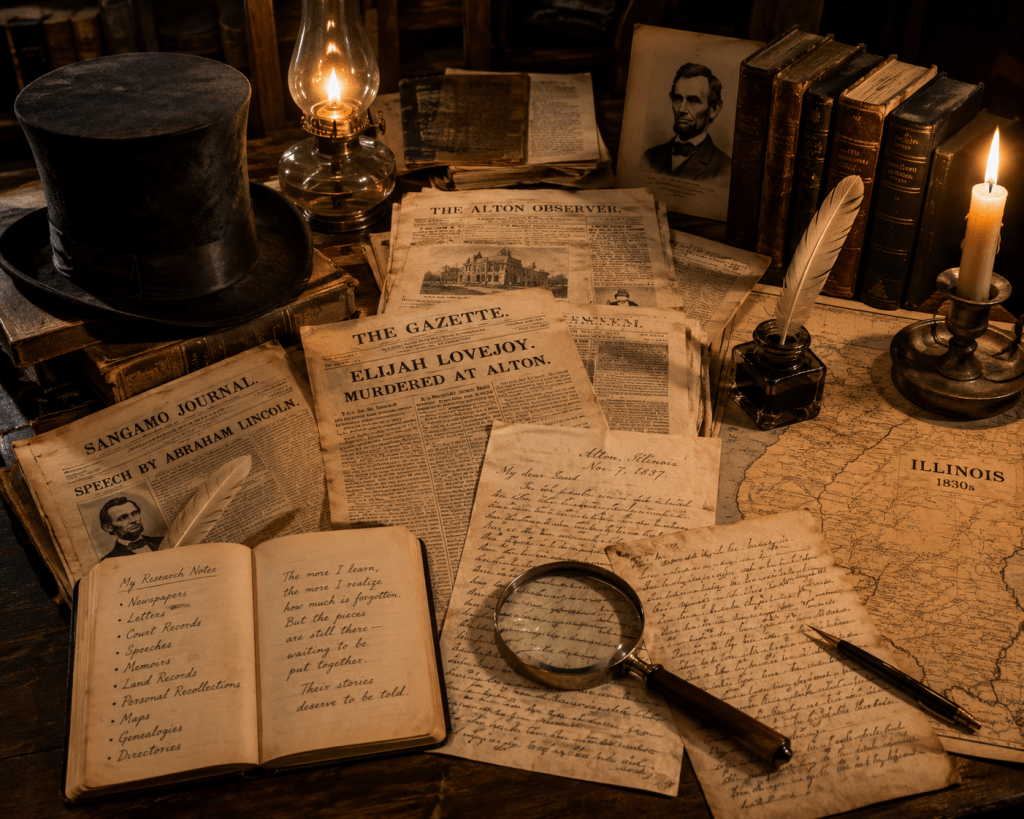
I spend months–and sometimes years–collecting pieces of a person’s life. Newspaper articles. Letters. Court records. Speeches. memoirs. Census records. Even advertisements and legal notices can reveal something about a person’s character.
One source rarely tells the whole story. A newspaper might describe a dramatic event. A court record may reveal what actually happened. A letter written by a friend may show an entirely different side of the same person. Eventually, the pieces begin to fit together. A voice emerges. A personality takes shape. Only then do I begin writing scenes, imagining conversations, and placing these remarkable people into the world of my novel. While those conversations are fictional, I want the people speaking them to feel like the men and women history actually knew.
One of the greatest pleasures of writing Lincoln Seeks Justice for Elijah Lovejoy has been discovering that many of the people surrounding Abraham Lincoln were every bit as fascinating as Lincoln himself. Some were courageous. Some were deeply flawed. Nearly all were far more complicated than the brief paragraphs history usually gives them.
That is one of the reasons I enjoy writing historical fiction. It gives forgotten people another chance to speak.
Current projects:
My book: continuing revisions of Lincoln Seeks Justice for Elijah Lovejoy
Edward Bryant: continuing preparations for future publication of his stories.
Thanks for walking alonside me.

