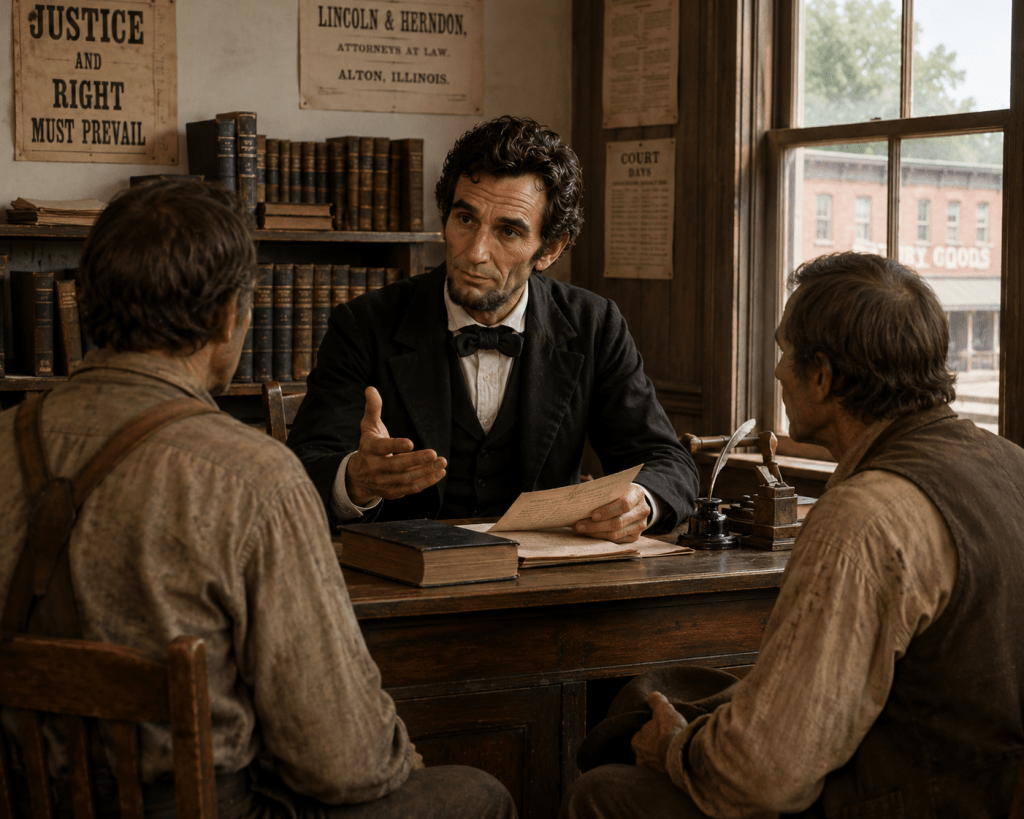
Abraham Lincon’s public persona was no accident. He carefully shaped the way people understood him. His frontier origins were real. He lived in a world of physical labor, limited schooling, rough travel, and borrowed books. But he also realized that those experiences carried politcal power.
The image of the rail splitter was not simply biography. It was also strategy. Lincoln recognized that juries, voters, and ordinary citizens responded to a man who appeared connected to their own struggles and daily lives. He knew how to present himself as someone shaped by common experience rather than privilege or distance.
The image worked because it was grounded in truth, even if it was sometimes simplified or emphasized for political effect or courtroom effect. Lincoln was an extraordinarily skilled storyteller, and part of the skill involved understanding how narratives form public perception. That ability appears throughout his career. Whether speaking in courtrooms, debates, or political speeches, he understood how to frame ideas in ways ordinary people could grasp immediately and relate to.
Lincoln’s political strength did not come only from intelligence or ambition. It also came from his deep knowledge of language, character, and human nature. That complexity is part of what makes him such a compelling figure to write about. In my novel, I often work to balance the real man with the public image people saw. History is filled with individuals who shaped their own stories, but few did it as effectively as Lincoln.
Current projects:
- My book: continuing my rewrite of my novel
- Edward Bryant: continuing to review stories for future publication
The stories people tell about themselves can sometimes become part of history itself.
Thanks for reading and walking alongside me.

