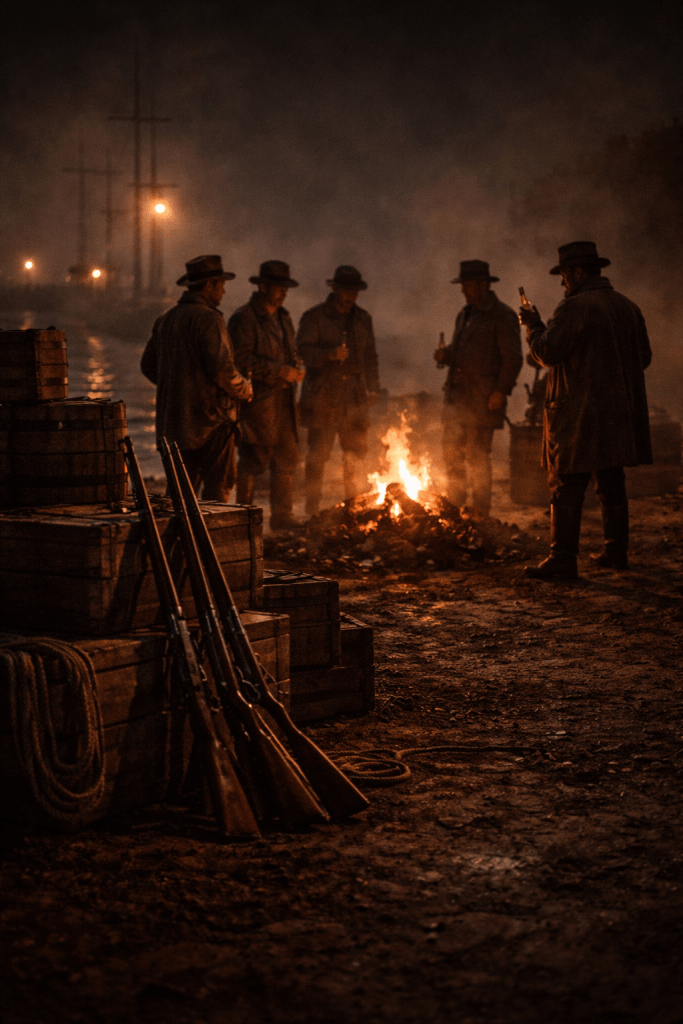
At writers group this week I read a chapter from my Lincoln novel that features Owen Lovejoy more prominently. He has appeared earlier in the story, but in this chapter he has two scenes of his own. While others gather and tensions rise around the arrival of Elijah’s fourth press, Owen moves stealthily among those who oppose his brother, listening and counting their number. It is a dangerous kind of work but essential. Owen is present, watching, and measuring what is coming.
In the same chapter, other threads unfold. William Harned is in his cellar molding bullets, defying the Sabbath. Along the river, the mob gathers, drinking and waiting. The opposition is no longer distant. It is organizing itself. This chapter also introduces the villains, who are plotting ways to murder Elijah Lovejoy and finally stop him permanently.
Owen Lovejoy interests me not only for his role in this moment, but for what he became. He later went on to serve as a congressman and was a close ally of Abraham Lincoln. Owen announced in Congress that he was a conductor on the Underground Railroad. But here, in this earlier moment, he is simply a man, like his brother, fighting for what he believes is right and facing the disaster that is forming around him.
Writing him in this way–before history has fully named him–brings the larger events down to a human level.
Current projects:
- My book: continuing to revise and rewrite Chapter Nine as the conflict deepens
- Edward Bryant: reviewing the stories for the next publication
History often remembers people for what they became, but a story allows us to see them as they were.
Thanks for reading and walking alongside me.
 The View From The Imaginarium